
If you’ve had the joyful experience of travelling in Italy with children, then you’ll know that Italians see past all cultural differences, and welcome you like long-lost cousins. It’s like having a bouncer just smile and let you into some exclusive club. If you aren’t travelling with children Italians are still welcoming, of course, but there are many ways in which you can ingratiate yourself quickly, by having an understanding of Italian culture and lifestyles. We are lucky to have some insightful Italians on our team who have given some of their insider top tips on travelling in Italy. Not only to avoid cultural or social faux pas, but also to make the most out of your trip. When you do that, you’ll feel like a child in a sweet shop anyway, as there are so many treats in store.
Be patient with public transport
Although public transport in Italy works pretty well, especially trains, it’s best not to completely rely on public transport in small villages and towns, as they might not always be precise, or indeed present. If you’re planning to travel to several remote areas of Italy, you may want to consider renting a car. Sundays, in particular, can be difficult for arrivals and departures, because a lot of things come to a standstill in rural Italy, including shops. If you love the fact that Italy still respects so many traditions, remember that having a family Sunday is still an important part of that. The only place we don’t recommend hiring a car is the Amalfi Coast or Cinque Terre as the roads get congested and polluted in peak times.

Get used to the notion of chiuso
Even though we do offer 24/7 support on all our tours in Italy, and our local partner is always on hand to help with any issues, Italy isn’t a 24/7 country. In most places, shops close during the afternoon, and you’ll often see a Chiuso sign between 13.00 or 14.00 to 16.00 or 17.00. Not so much in the big cities, but in more rural areas such as on our Hiking in South Tyrol, or along the Alta Via, people still go home to have lunch with their families and then take an afternoon nap. Get over it, chiuso happens.
Get used to the notion of aperitivo
Hardly surprisingly, it’s normal for Italians to dine much later than some other cultures, usually around 20.00 or 21.00, and many restaurants don’t open before 19.00 or 20.00. To make up for the late dinners, Italians love to have an aperitivo, which is the tradition of having drinks before dinner, often accompanied by charcuterie, cheese or even small sandwiches and meatballs. It’s also a time when Italians like to catch up with friends and just shoot the breeze.

Loving the language
Italian always sounds poetic. Even when you’re on a train and you hear the list of stations being announced, it sounds like they could be declaring love to you all. It’s just got layers of passion. However, it’s worth remembering that each region and town has its own accents and dialects. Some words could change completely from one town to the next. For example, the accent in northern Italy is very different to that on the Amalfi Coast and then Sicily and Sardinia are worlds unto themselves. Furthermore, not everyone can speak English, so do please be mindful when communicating with local people. Also, a surprisingly high amount of visitors speak to Italians in Spanish, and that doesn’t go down well.
“Italians are really friendly and welcoming people. When we speak, we tend to use a lot of hand gestures, and might seem agitated or nervous. But please know that is not the case, it’s just the way we talk!” – Dalila Berlingerio, Adventure Sales Specialist at The Natural Adventure.
Don’t mention the mafia
Visitors can cause offence by joking about the Mafia, or doing impressions of The Godfather, and yet it’s amazing how often this happens. The term Mafia refers to criminal organisations in Italy, and the war against these organisations is still ongoing in some parts of the country. It’s a very controversial area, as there have been times when these organisations have helped local people when the government wouldn’t help, but they do so by then demanding money or using threatening behaviour. So, it’s not a joking matter. Of course, it also goes without saying that it’s still really safe to travel in Italy.

When in Rome
Sadly, there are some troublesome areas in Italy when it comes to pickpocketing, like so many countries of course. So when travelling to major cities such as Rome, Naples or Milan, please beware of pickpocketers. Make sure you are aware of your surroundings and that you have your personal belongings well concealed.
Savour slow food
Italy and, in particular, Piedmont, is the home of slow food, and so there is no better country to celebrate traditional, artisanal goodies. Please visit local markets and buy local produce, rather than shopping for food in big supermarkets, as it really does help the local community. If you are buying foodie gifts, look out for denominations like DOP on products, which show they are approved for quality and local provenance.
Also, don’t just go for pasta and pizza, as Italian cuisine has so much more to offer. Every region has different dishes and traditions, such as Puglian charcuterie, which is said to be some of the finest in Italy. Other Italian feasts from around the country include risotto al Barolo in Piedmont, ribollita soup with cannelini beans and cabbage in Tuscany, or the delectable stuffed anchovies of Liguria. These are all just to whet your appetite, and to remind you to research your regional fare as part of prep for your adventure.

On our wine menu
Visiting a vineyard in Italy is, in vino veritas, the best way to imbibe the country’s natural heritage. You can sense the nobility of Tuscany as you cycle through two of its most highly regarded wine areas in the south of Chianti. Two hilltop towns of Montalcino and Montepulciano await, overlooking vineyards that produce Brunello di Montalcino and Vino Nobile di Montepulciano. On this walking holiday of the Chianti Wine Trails, you spend eight days strolling along the rolling hills bedecked with vineyards that date back to the 13th century and where, in some places, it feels as if time has stood still. And we have two walking holidays in the Piedmont, the first combining the wines of Langhe with the shores of Liguria and the second taking you through the valleys and vineyards between Barolo and Barbaresco.
Hone in on hidden Italy
There are some Italian idylls that sneak under the radar, especially for hikers and cyclists. Some of our underrated utopias include the Via Francigena, an ancient pilgrimage route that opens up the sacred heart of Italy’s much worshipped interior. Or Val Maira in Piedmont, a walking trail that takes you through the southern Alps, close to the French border. For more information, see our blog, Most underrated places in Italy.

Don’t be blind to Venetian crowds
Overtourism has become an unfortunate reality in Venice, due to the growth of the cruise liner industry and budget airlines. Although our adventure holidays steer well away from mass tourism for the most part, we have a number of natural adventures that start, finish or pop into Venice. Such as cycling from the Dolomites to Venice, although your time in the city is spent on mainland Maestre, so away from the crowds. Or you can avoid the crowds around both Lake Bled in Slovenia and Venice by cycling between the two cities on a tour that operates as early as March and as late as October, so you can travel out of season.
Cultural sensitivity
Italians are inherently proud of their culture, be it their language, music, arts or cuisine. As well as learning a few phrases, please respect their cultural heritage by covering up in churches, not taking photos of people without asking and remembering that ancient sites and local festivals are still sacred for many.
Recognising Italy’s rewilding movement
The movement to bring back wolves in Europe has also been led by conservation organisations in Italy’s protected areas for many years now. With an estimated 3,300 wolves, the highest number are in the Apennines and the region of Abruzzo, and their reintroduction also involves an impressive educational programme to reassure people about wolves. Wolves aren’t the only focus of rewilding organisations in Abruzzo either, with bears, chamois, lynx and golden eagles just a few other species that must be protected. Although we don’t have any adventure holidays in Abruzzo at present, there are also wolves in the Italian Alps and Dolomites, Tuscany and Emilia-Romagna, where we do have holidays, although you are very unlikely to see them.

Go safely in the mountains
Italy has some impressive high mountain trails, including the Tour du Mont Blanc, which it shares with Switzerland and France, and also our Italian Alps and Dolomites holidays. Please do always take time to learn about precautions and processes needed to hike safely in the mountains. We’ve written this blog to share top tips on mitigating against unfortunate incidents, and acting to assist in the event of an issue.
Waste not, want not
Italy recycles 79% of collectable waste, one of the highest rates in Europe, and each region has its own colour-coded guidance. As with all travels, leave any packaging at home, avoid all single-use plastic and bring a cloth shopping bag with you.
If you enjoy reading about Italy, we have some other inspo and info on one of our most popular holiday destinations in the following blogs: Long-distance trails in Italy; Best time to go to Italy; Best hikes in Italy; and Meet the people who know the place: Dalila in Puglia. For any other details, please don’t hesitate to contact our adventure specialists.

Walking in Umbria: Orvieto and Lake Bolsena Short Break

Cycling in Marche by E-bike: Pesaro and Urbino

Walking in Umbria and Lazio: Orvieto and Lake Bolsena

Walking in Friuli Venezia Giulia (Centre-based)

Walking in Emilia-Romagna: Cammino dell’Unione

Walking in South Lake Garda

Cycling in Umbria and Lazio by E-bike: Cammino dei Borghi Silenti and Lake Bolsena

Cycling in Umbria and Lazio: Orvieto and Lake Bolsena by E-bike

Walking in North Lake Garda (Centre-based)

Walking in Lake Garda: Valle dei Laghi
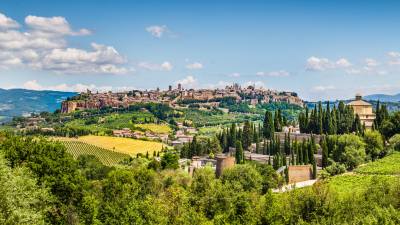
Cycling in Umbria: Cammino dei Borghi Silenti by E-bike


